Subscribe to the newsletter
Culture and Exploration
Discover the Pekuakamiulnuatsh language
| Updated on
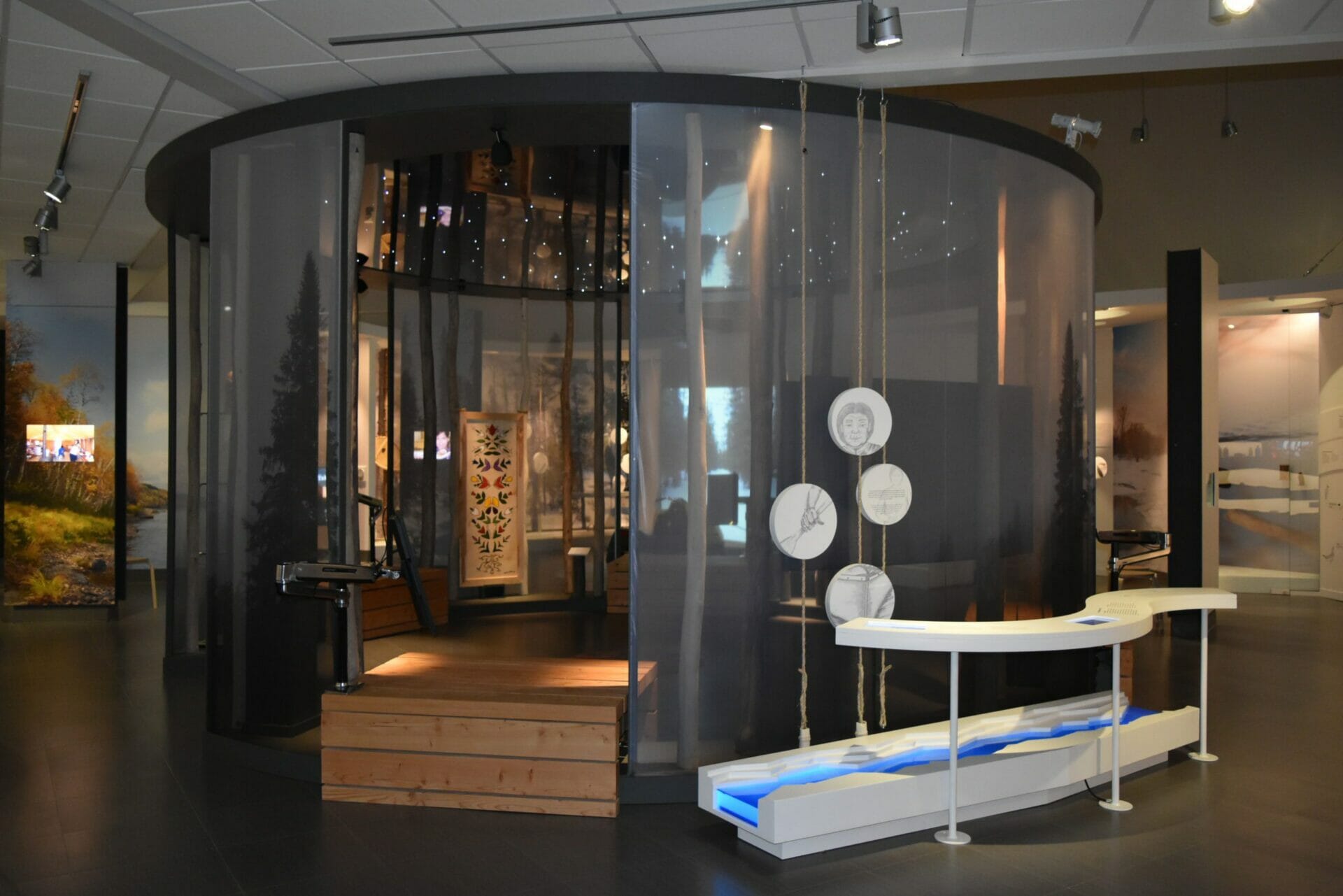
Lac Saint-Jean has been a gathering place for First Nations peoples for thousands of years. In fact, many rivers and places around the lake bear Montagnais names.
Here is a glossary of Montagnais words you’ll come across during your stay at the lake.
- Kuei – Hello in Innu.
- Pekuakami – The name given to Lake Saint-Jean means “shallow lake,” “flat lake,” or “lake with flat shores.” Pâk means “shallow” or “flat,” and kami means “water” or “lake.”
- Les Pekuakamiulnuatsh – Pekuakami First Nation (Lac Saint-Jean)
- Nehlueun – The Ilnu language of Mashteuiatsh
- Ilnu/Ilunatsh (singular/plural), a Native American name for the Montagnais, meaning “Man”
- Mashteuiatsh– Where there is a headland, also known as Pointe-Bleue. For the Ilunatsh, this headland was long a gathering place and one of the busiest thoroughfares. Even today, Ilnu culture is proudly represented there.
- Rivière Ashuapmushuan, a place where you can hear moose
- Manitou – The Spirit of the Spirit / The Higher Being.
- Métabetchouan :The stream flows into the lake
- Mistassini : large rock. Cree place name MISHTA: large, rocky outcrop, boulder.
- Rivière Mistouc:From the mountains, a piece of wood
- Ouananiche – Means “lost” or “out of place.”
A fish native to this region, the trout is believed to have evolved into the ouananiche following the retreat of saltwater. The ouananiche (Salmo salar ouananiche) is also known as the freshwater salmon. - River Ouiatchouan – (Uiatshuan shipi : We often pass by this spot (reflection)
A winding road, full of curves. - River Couchepaganiche :Small River of Embarkation
- Péribonka – Derived from the Algonquin word PERIWANGA, meaning “river cutting through the sand.”
- Iutaku (Windigo) – The cannibalistic giant of the forest.
Source : https://shistoriquesaguenay.com/noms-amerindiens-de-la-region-du-saguenay-lac-saint-jean/
To learn more about Indigenous history and culture in Lac-Saint-Jean:
Musée amérindien de Mashteuiatsh FB : https://www.facebook.com/musee.demashteuiatsh
Centre d’Histoire et d’Archéologie de la Métabetchouane FB : https://www.facebook.com/chamdesbiens/
To learn the Pekuakamiulnuatsh Mashteuiatsh language: https://nehlueun.com/