Whether you’re a casual angler or a seasoned pro, if you’re looking for a memorable fishing experience, Lac Saint-Jean is the perfect destination.
Here are 8 great reasons that are sure to win you over!
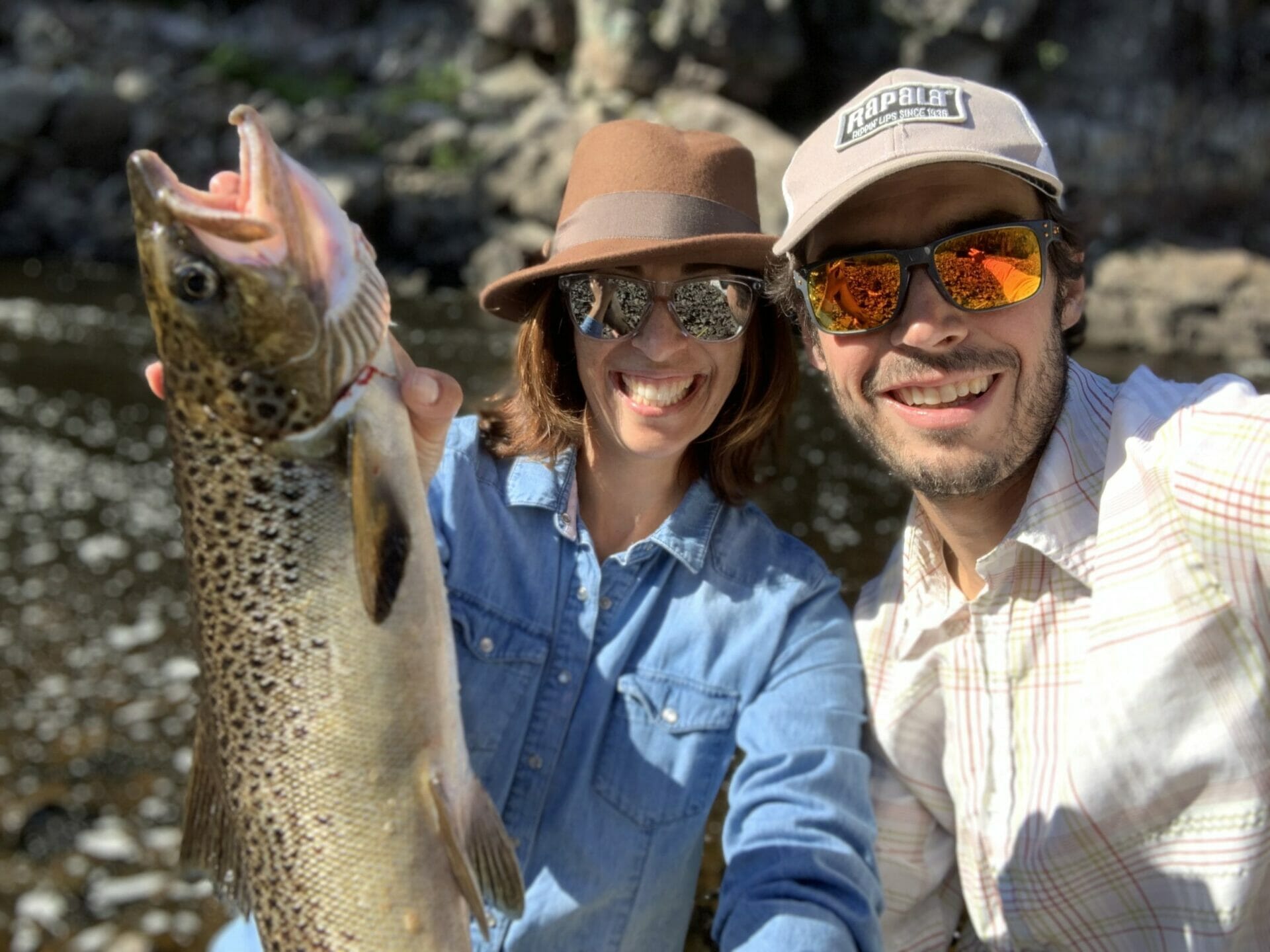
Lac Saint-Jean is recognized as the body of water in Quebec with the highest concentration of walleye and the world’s largest lake for wild ouananiche.
The ouananiche (Salmo salar ouananiche) is abundant. The installation of artificial spawning grounds for smelt has significantly contributed to increasing the freshwater salmon population in the lake.
2020 was a record-breaking year. Walleye fishing was the best since 2012, and ouananiche fishing was the best in the last 25 years, with nearly 12,000 ouananiches caught in a single day (a 48% increase compared to 2019).
The lake trout is an endemic species. There are few places where you can fish for them, and sites for wild lake trout fishing are even rarer.
Lake trout in Lac Saint-Jean can weigh up to 10 pounds. Calling all trophy fish enthusiasts!
Fly fishing for ouananiche is just as challenging as salmon fishing, and the chances of catching one are better. Plus, you can keep the large specimens, unlike in salmon fishing, where fish over 63 cm (large salmon) must be released.
Walleye is a fish with tender, delicious flesh.
The lake trout of Lac Saint-Jean is a native wild fish; it is not the result of stocking. You’ll therefore have the chance to enjoy a tasty wild fish that you won’t find in any grocery store. It doesn’t get any more organic than that!
By Gilles Granal, Adventure Tourism Expert – Aventuraid
Lake Saint-Jean and its beaches are an undeniable tourist attraction, and its large, wild rivers make it an exceptional destination for nature and adventure.
There are few places in Quebec where you can find so many navigable rivers within such a small area.
It’s no coincidence that the Grandes Rivières Regional Park now exists. www.grandesrivieres.com.
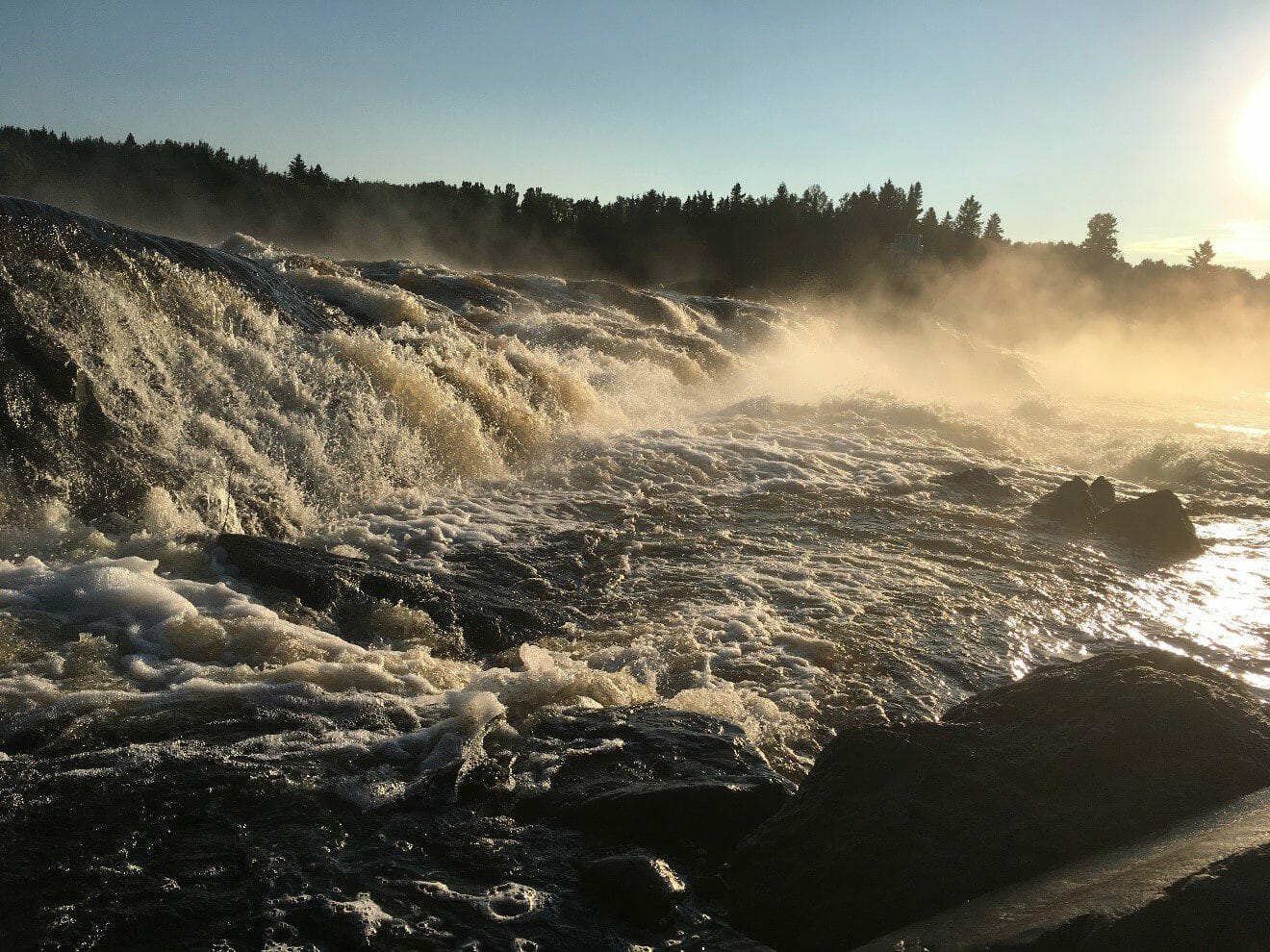
The Métabetchouan, Ashuapmushuan, Mistassini, Ouasiemsca, Northwest and Northeast Mistassibi, and Péribonka rivers—to name just the major ones—flow into Lac-Saint-Jean, bringing it to life. These rivers, with their turbulent, powerful waters and a width that surpasses that of many major rivers, are must-see attractions.
It’s impossible to describe them all here, but you can find them on the website www.cartespleinair.org, which features guide maps of these magnificent rivers and several other waterways in the region. For the major rivers, please refer to the Zone 06 directory.
From the serenity of calm waters to the thrills of whitewater, everyone will find the perfect river for them at Lac-Saint-Jean, whether they’re a beginner or an expert, paddling in a canoe, a Rabaska, a whitewater kayak, a sea kayak, or on a paddleboard.
While they can be navigated in their entirety, each offers more specific routes that define them. Paddling in Lac-Saint-Jean isn’t just about discovering magical rivers—it’s above all an unforgettable experience in the heart of the wilderness.
With Aventuraid www.aventuraid.qc.ca, you’ll mainly explore the Mistassini, Mistassibi, and Ouasiemsca rivers.
Whether it’s for multi-day adventure trips or one-day introductory sessions.
Rivers to Explore
The middle section of the Mistassini River offers a stretch of just over 100 km without rapids, featuring beautiful beaches perfect for camping. Several easy access points make it possible to plan a trip lasting anywhere from one day to a week. Ideal for families or friends, it offers a peaceful canoe-camping experience along the river. The forest road, which is never far away, provides added safety by offering several emergency exit points.
The Mistassibi, with its northwest and northeast branches, is an internationally renowned river.
For trips of 5 days or more, you’ll need to venture deeper into the forest. There, you’ll be fully immersed in a true northern adventure.
The most famous section of the Mistassibi Northwest offers a highly varied route. It winds its way through meandering bends before reaching Lac au Foin, which is bordered by high, steep cliffs, and then features some spectacular rapids. An intermediate skill level is required to enjoy it safely.
If there’s one river that will make you fall in love with canoeing and discover the essence of the North, it’s the Mistassibi Nord-Ouest!
The Mistassibi Nord-Est is the ultimate whitewater canoeing river. Well-known to all experienced paddlers, it offers a unique, challenging trip through the heart of the boreal forest.
Further downstream in Saint-Stanislas lies one of the most beautiful rafting routes in Quebec.
The Ouasiemsca is smaller than the previous rivers. This wild river, with its varied course, alternates between challenging stretches and calmer sections. With several access points, you can paddle here for anywhere from a day to two weeks.
These are all beautiful rivers that will let you get out on the water!
Let me tell you about my first ouananiche fishing trip. No, I won’t be telling you stories about gigantic fish or barely believable tales of miraculous catches. Instead, this is about love at first sight—an encounter with a feisty fish that got me hooked on fishing. A passion that has driven me for 13 years now and has become a family activity.
It’s June 23, 2008, and we’re heading out with a couple of friends to fish for ouananiche on Lake Saint-Jean. A first for me! Up until then, my fishing experience had been limited to trout.
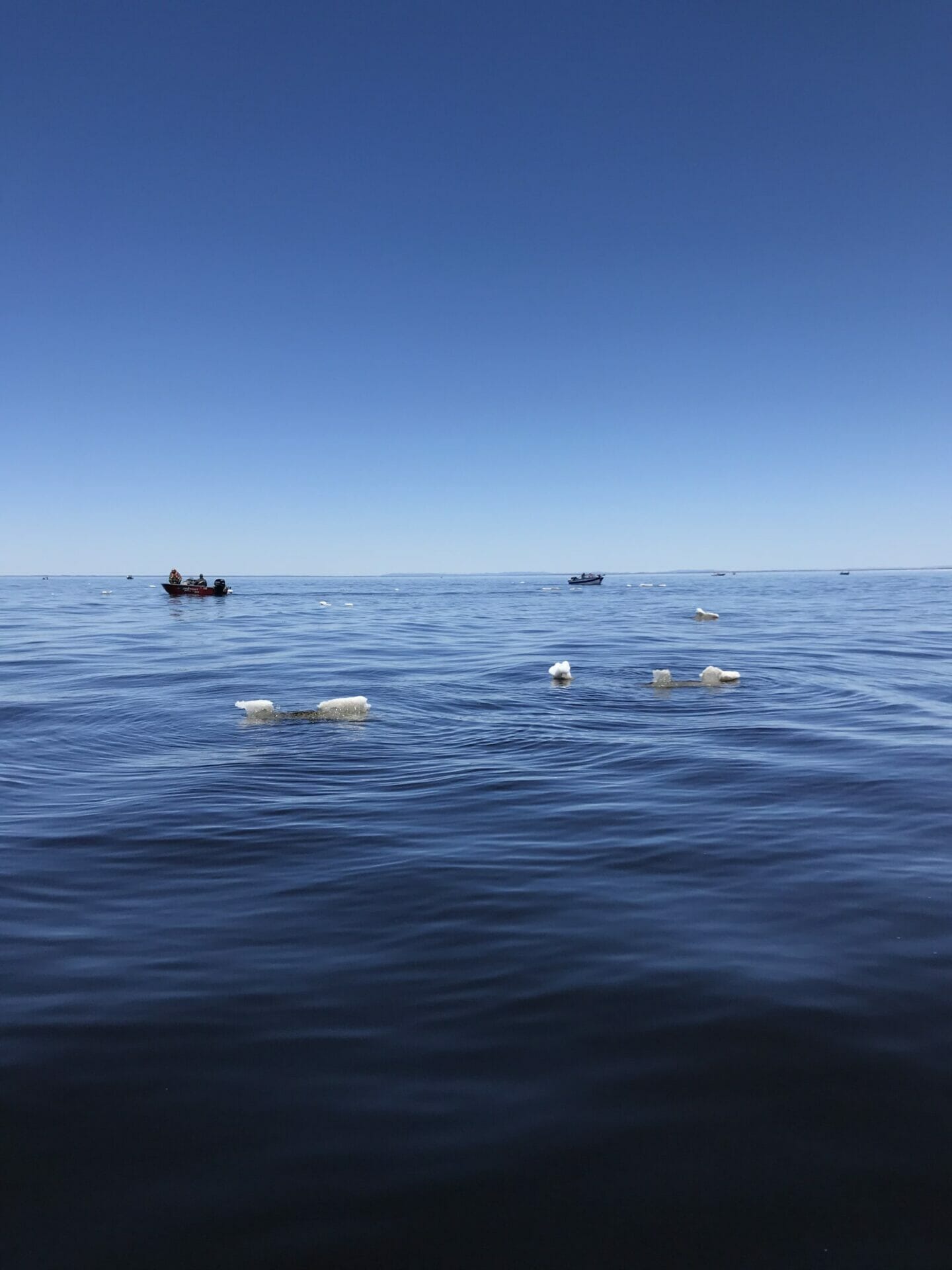
Here we are in Chambord, launching from the municipal dock. There’s a frenetic atmosphere on board. It must be said that boat fishing on Lake Saint-Jean has a certain “je ne sais quoi” about it. When you’re in a rowboat on this vast inland sea, you feel tiny. Plus, the sun is shining brightly, the water is calm, there are plenty of anglers around us, and the boats are bustling with activity. Just as we were setting out, we saw an angler pull a fish out of the water. In short, all the ingredients are in place for a perfect day of fishing!
We head toward Val-Jalbert, following the riverbank. We make our way along slowly, using dry flies and light trolling lures. We change lures fairly often, trying to entice the coveted fish with something a little “new.” Time is passing, and we’re starting to think the fishing might not be productive when suddenly, I feel three sharp, distinct tugs on the end of my rod. “Fish on”!
I set the hook, and the fish automatically tries to swim away. I let it run, it jumps, trying to break free. I reel it in; it’s right next to the boat… it jumps again and heads back out to sea! Oh, I’m so afraid of losing my catch… especially since the ouananiche looks like a good-sized one! After a 10-minute fight, I manage to reel the fish back to the boat and finally land it. WOW! A 5-pound ouananiche!
I can’t tell you how happy I am!
I can’t wait to cast my line again. All I want is to experience that incredible feeling all over again—to feel my heart racing when I feel those three little tugs on my line and see the fish leap out of the water!
Since then, I’ve been returning to Lac-Saint-Jean every summer to fish for ouananiche on the lake, but also in the rivers, since ouananiche can be fly-fished just like salmon. This sport fishing is just as thrilling as salmon fishing, and it has allowed me to discover some idyllic spots in Lac-Saint-Jean. It’s an experience I highly recommend!
How do you fish for ouananiche in Lac Saint-Jean? What are the best spots for it? Marc Archer, Executive Director of CLAP, shares valuable tips for a successful fishing trip.
How to fish for ouananiche
Lake whitefish can be caught from the shore or by boat on Lake Saint-Jean.
It can also be fly-fished in rivers, but this activity is subject to a quota, and you must enter a preseason lottery to gain access. For more information: : https://claplacsaintjean.com/ouananiche/
Wade fishing
The most commonly used technique is “float fishing.” This technique has long been proven effective here and is practiced by many residents living around the lake.
You will need:
A silver Toronto Wobbler-style spoon
A pre-tied size 4 or 6 single hook
A red-and-white round float
Earthworms
Editing and technical aspects:
Replace the spoon’s treble hook with a pre-tied single hook baited with a large earthworm. Attach the float to the main line about 3 feet above the spoon.
Cast your rig as far from the shore as possible and let it drift in place. If the wind or current drifts your rig back toward the shore, recast.
Are the fish active? Change your lure and technique!
If the fish are active on the surface—if you see them jumping out of the water or their backs breaking the surface—you need to get active too.
Replace your rig with a small silver spoon or a floating wobbler that mimics a minnow or a rainbow smelt. You can also use a streamer if you’re a fly-fishing enthusiast.
If necessary, clip a few small round weights (split shots) onto the line a few inches in front of the lure to make casting easier.
Cast directly into the school of lake trout and retrieve the lure quickly with sharp, jerky pulls.
The best spots for wading:
Les épis de Saint-Gédéon
The municipal pier at Métabetchouan
The Lac St-Jean Motel near Desbiens(For motel guests only)
The municipal pier at Chambord
The mouth of the Ouiatchouane River in Val-Jalbert(only at the start of the season)
The harbor at the Roberval Marina
La Pointe Scott à Roberval
The Chute à Michel section of the Ashuapmushuan River in Saint-Félicien until June 30 (quota-based fishing thereafter)
The First Falls, Second Falls, and Fifth Falls on the Mistassini River in Dolbeau-Mistassini until June 14 (quota-based fishing thereafter until July 31)
The Chute des Pères on the Mistassibi River in Dolbeau-Mistassini
The Chute à la Savane on the Péribonka River in Sainte-Monique
Boat fishing
Boat fishing techniques vary depending on the time of summer.
Surface trolling near the shore
In May and June and in late summer, landlocked salmon can be caught by surface trolling near the shore using light tackle or a fly rod.
Recommended lures:
Wobbling spoons
Floating wobblers
Streamer-style flies
The best fishing spots:
Desbiens
Chambord
Val-Jalbert
Roberval
Mashteuiatsh
Saint-Henri-de-Taillon
Péribonka (Île Boulianne)
Vauvert
Alma Islands at the entrance to the Grande-Décharge (late summer only)
Deep-water offshore fishing
When the lake water is warmer in July and August, lake trout can be caught offshore in the mid-water column, ideally using a downrigger and a fish finder.
The trick to finding lake trout? Look for schools of smelt! Where there are smelt, there are sure to be lake trout!
The known deep spots during this period are:
The Pointe-à-la-Savane Trench off the coast of Pointe-Taillon
The Mashteuiatsh Trench extending from the Ashuapmushuan River
The Desbiens Trench extending from the Métabetchouane River
Schools of smelt can also be found all over the lake. All you have to do is locate them with a fish finder and fish over them.
The best lures to use:
Wobbling spoons
Floating or sinking lures (if no downrigger)
Tube flies and large streamers
Downrigger fishing technique:
Attach the main line to the weight and lower it to the depth of the smelt schools, which is 12 to 18 feet in Lake Saint-Jean. Attach a wobbler, a floating plug, or a tube fly preceded by a “flasher” to the end of the line.
You can add a second line to the main line—a “spool line”—which is about the length of the rod. The spool line is attached to the main line with a swivel and positions itself at half the depth of the sinker. Attach a thin silver or copper spoon to its end.
Fishing techniques without a downrigger:
Light casting with a sinking plug
Heavy line with a spoon or a floating plug
Fly fishing with a heavy sinking line and a tube fly or a large streamer
Limits on taking and possession
On Lac Saint-Jean, the daily catch limit and possession limit are two lake trout per Quebec fishing license.
Do you have a fishing permit?
To fish in Lac Saint-Jean, you must have a Quebec sport fishing license and a “permit to fish in the Lac Saint-Jean Community Wildlife Area” (access permit). The fishing permit is available for purchase online at https://claplacsaintjean.com/autorisation-de-pecher/.
Have a great day fishing, stay safe, and wear a life jacket!
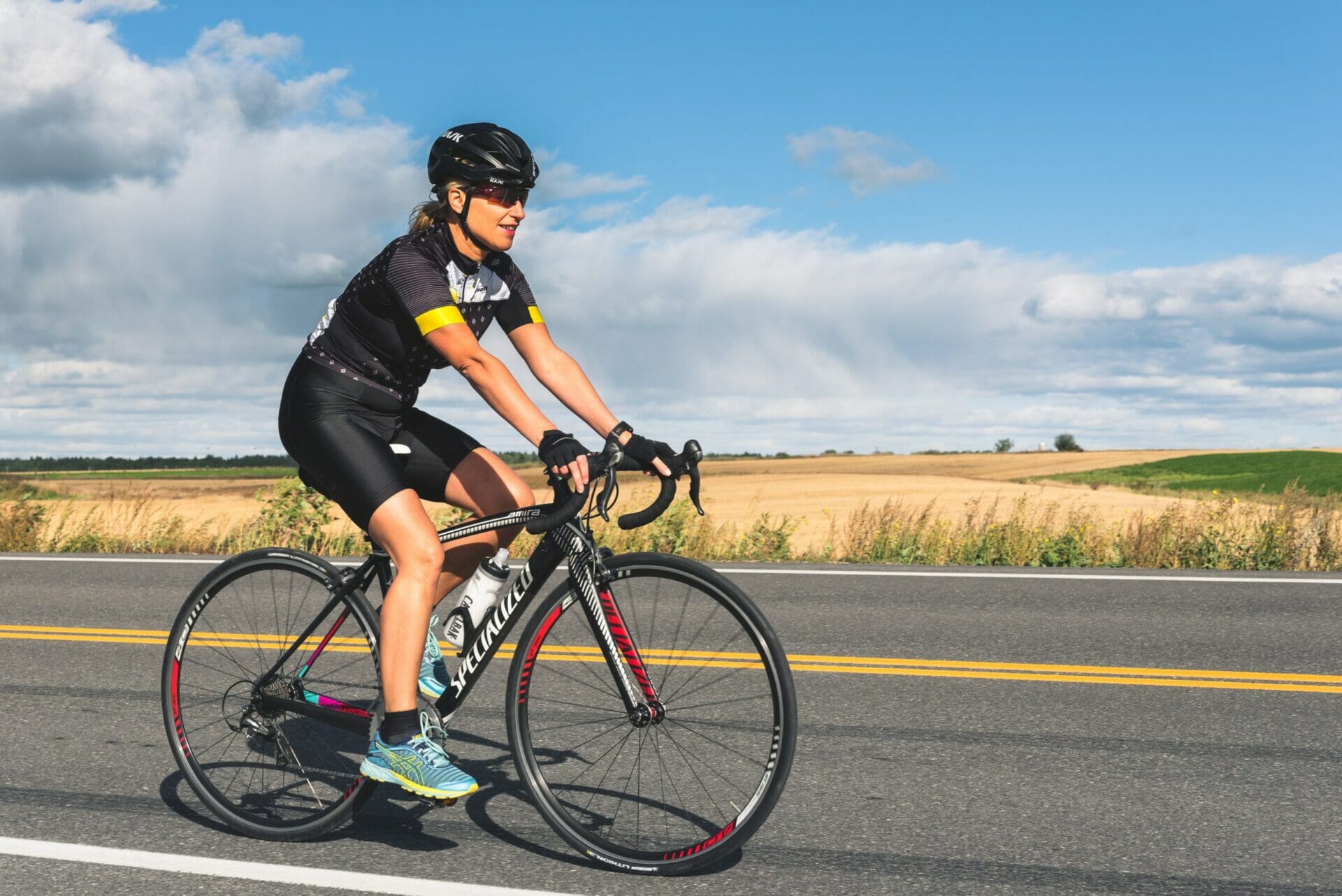
Are you planning to cycle around Lac Saint-Jean this summer? Here’s what you’ll need to bring!
Whether this is your first bike trip around Lac Saint-Jean or your umpteenth time doing it, it’s always a good idea to keep a few basics in mind before setting out. David Lecointre, executive director of the Véloroute des Bleuets and an experienced cyclist, offers these tips.
What to pack for a trip around the lake
Cycling trips usually mean packing light, but certain clothes and/or accessories are still essential. Here are the must-have items to pack when you come cycling in Lac-Saint-Jean.
A windbreaker
Rain gear
A neck warmer
Sunscreen
A swimsuit for afternoons by the water after biking
A sweatshirt for evenings by the fire
The Cyclist’s Kit
Since you can never be too careful when it comes to flat tires, mechanical breakdowns… or a sudden hunger pang, here’s the kit every cyclist should always bring along on a ride.
A pair of disposable gloves
3 tire levers
A new inner tube
A CO2 cartridge or a pump
A mini multi-tool kit
A $20 bill (for a beer after the ride or to patch a flat tire)
The geographical location of the Saguenay–Lac-Saint-Jean region and its associated climatic conditions have a direct influence on the terroir.
Immerse yourself in our boreal region, whose identity is shaped by vast wilderness, fertile farmland, warm-hearted people, and unique expertise.
The first key factor is geographical isolation. It is important to understand that the Saguenay–Lac-Saint-Jean region, a remote area, is completely isolated by mountainous plateaus that act as geographical barriers. The second factor influencing the regional terroir is the climate. Due to its latitude, the climate features long, cold winters with heavy snow cover. Summers are short and hot with long hours of sunshine. Finally, there are significant temperature differences between the day and the cooler nights.
Added to these geographical and climatic conditions are the people—men and women with warm, supportive, and creative personalities—who have adapted to and made the most of their environment and who have been shaped by the times.
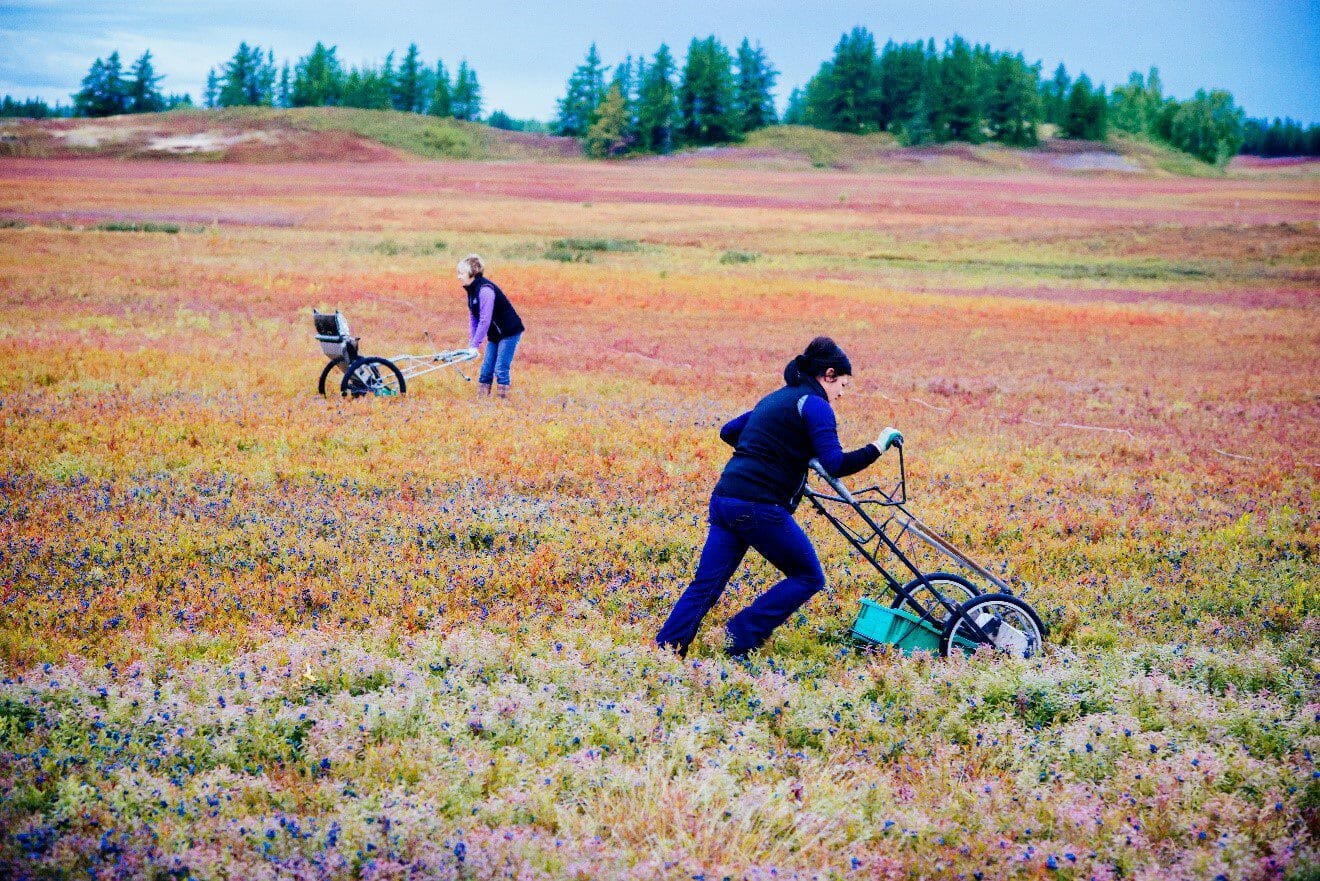
It is this combination of natural conditions and human factors that directly influences the agricultural practices of the Saguenay–Lac-Saint-Jean region. For example, isolation, remoteness, and harsh winters provide a natural barrier that makes it easier to control diseases and pests. This allows for reduced use of synthetic pesticides in crops and fewer antibiotics in livestock farming. It also promotes responsible practices and better management of food quality. The short summer season is ideal for growing a variety of crops and harvesting a wide range of wild plants. The alternation between warm days and cooler nights influences plant metabolism by concentrating certain molecules. It’s almost as if the plant goes into dormancy and can’t use up what it has accumulated during the day, leaving us the pleasure of enjoying it instead. Many of these plants are also known for their beneficial properties for human health. They can also be used to feed dairy herds, livestock, and even the bees that forage on them!
The people of Saguenay–Lac-Saint-Jean have thus developed a form of agriculture tailored to the region’s conditions by combining tradition and innovation. Local businesses and their partners form a network through which they collaborate to highlight these unique characteristics.
Now it’s your turn to savor the region’s signature products.
In winter, experience the northern climate of Lac Saint-Jean while staying nice and warm in the Igloft dome. Come summer, the same dome features a dock where you can tie up your kayaks after a paddle to watch one of the most beautiful sunsets in Quebec!
Glamping in a yurt at Domaine l’Orée des Bois, Notre-Dame-de-Lorette
Domaine l’Orée des Bois offers a glamping experience in yurts located right in the middle of their orchards! You can even take advantage of your stay to enjoy a truly relaxing culinary experience.
Prêt-à-camper Étoile, Parc national de la Pointe-Taillon
Pointe-Taillon National Park offers five ready-to-camp units in the Les-Amicaux sector. The cube-shaped Étoile ready-to-camp unit is supported by a wooden frame covered with a waterproof tarp and offers all the amenities of a traditional ready-to-camp unit.
Glamping in a yurt at the L’Oasis recreational tourism village
L’Oasis, a recreational tourism village, invites you to spend the night in one of its six yurts, offering all the joys of camping without the inconveniences of a traditional tent. A unique glamping experience!
The Eco-Lodges of Mahikan Park
Mahikan Park, recognized as the largest wolf-viewing park in Quebec, offers accommodations where you can fall asleep to the sound of wolves howling. Ready for a face-to-face encounter?
Camping du Ranch, Grandes Rivières Regional Park of Lac Saint-Jean
Looking for a 100% Western atmosphere? In addition to standard campsites, the Domaine du Ranch offers horseback camping sites where horse owners can camp with their horses and enjoy riding!
Traditional Indigenous Lodging at Aventure Plume Blanche
Enjoy a unique experience by staying in one of the six traditional Indigenous dwellings available at the Aventure Plume Blanche site. Which one will you choose?
Domaine des Trois îles
Located in an enchanting setting along the banks of the Ashuapmushuan River, just minutes from downtown Saint-Félicien, the Domaine des Trois Îles is a memorable, one-of-a-kind destination where guests can enjoy the Coolbox experience—mini-cabins designed by a firm based in Saint-Prime, in the Lac-Saint-Jean region.
Make Your Own Cheese at the Perron Old Cheese Factory Museum
In this unique experience, we invite you to step into the shoes of a real cheesemaker and make your own cheese while discovering the various cheese-making techniques used to create the different types of cheese we have in Quebec. An ideal activity for food-loving families!
Collecting crystals at the Cristal du Lac mine
Are you a treasure hunter? Cristal du Lac invites you to dig in their open-air deposit to find your own quartz crystals.
You can also enjoy a hike right in the heart of the forest in Métabetchouan-Lac-à-la-Croix!
Watch wolves at Mahikan Park
As Quebec’s largest wildlife observation center dedicated to wolves, Mahikan Park invites you to watch wolf packs living in semi-freedom and learn more about pack life and how it works.
Try rock climbing at Escalade Haut Clocher
Are you a family of sports enthusiasts? Come climb the 10-meter wall built right inside the nave of St. Stanislaus Church. The center also offers a variety of classes and training sessions on indoor and outdoor climbing.
Canoe trip down the Mistassini River
Accessible and safe, the Mistassini River offers canoeists and kayakers sandy beaches and diverse scenery. The adventure can take the form of a canoe-camping trip or a day-long excursion!
For the Pekuakamiulnuatsh (the Ilnuatsh of the Mashteuiatsh community), the rivers of Lac-Saint-Jean are more than just waterways; they are ancestral routes. Our history and way of life revolve around the Pekuakami (Lac-Saint-Jean) and its tributaries.
Our people, who have inhabited the vast territory extending beyond the Pekuakami watersheds for millennia, have always used the rivers as transportation routes. They are our highways! In the past, they were the primary means we had to travel to our hunting grounds in the fall and return to the lake when spring arrived.
Families would leave the community in the fall in their canoes to travel upriver along the major rivers surrounding the lake (Mistassini, Mistassibi, Péribonka, Ashuapmushuan, Métabetchouane, etc.). As they traveled upriver, the families would split up as they reached their family hunting grounds.
These expeditions were long and arduous. I remember the stories my grandfather told me about how it took them two months to reach the family hunting grounds at the headwaters of the Mistassini River. For each stretch of the river, the men would make an initial trip to transport most of the luggage and set up camp. Then they would return to fetch the family and travel back up the same stretch of the river the next day. The journey was long, but it was undertaken calmly, taking care to quietly gather provisions for the long winter months.
There were many portages along these turbulent waterways. In fact, several major rapids still bear traces of these old portages today. The next time you paddle on the rivers around the lake, keep your eyes peeled—you might spot remnants of these trails, which are still visible.
Even today, Ilnuatsh families still occupy and travel down certain sections of the rivers, with grandparents continuing the oral tradition by telling the younger generation about their adventures and stories from the territory. Every year, a river trip is organized by the community to give First Nations members the opportunity to experience this tradition and commemorate the culture and heritage that has been passed down to us.
What has changed is how quickly we can reach our hunting grounds. Nowadays, we can make the trip in a single day. The distance is the same, but the roads that have been built over the decades—and especially modern transportation—have made it much easier to access these remote areas.
If you’d like to learn more about the history and culture of the Pekuakamiulnuatsh, I invite you to take advantage of your visit to Lac-Saint-Jean to visit the Musée amérindien de Mashteuiatsh, where you’ll discover the richness of our thousand-year-old history.